
Leaf traits
Leaf shape, tip, surface, and petiole details help compare plumeria when flowers are not enough.
Leaves are not a perfect identification tool by themselves, but they can support comparison when recorded consistently. Plumeria Database treats leaf shape, leaf tip, leaf size, surface, vein pattern, petiole length, and petiole color as separate observations.
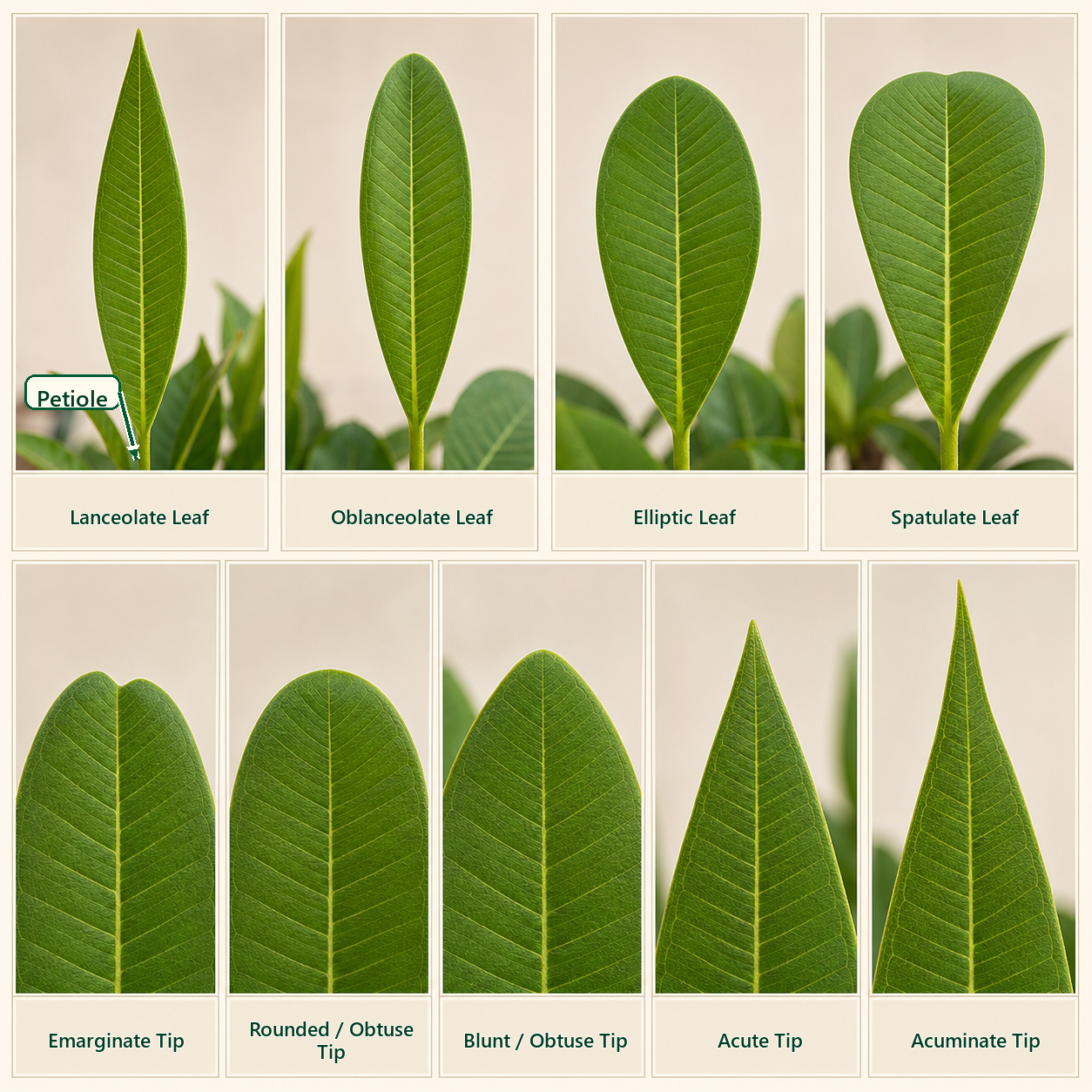
Lanceolate
Narrow and tapering toward both ends, often appearing longer than wide. This is a common shape family for many plumeria leaves.
Oblanceolate
Wider above the middle and narrower toward the petiole. This can make the leaf look broad near the tip and tapered at the base.
Elliptic or Oblong
Elliptic leaves are oval-like and balanced, while oblong leaves have more parallel sides. Record the closest repeatable shape.
Spatulate
Spoon-like leaves are broader toward the tip and narrower near the base. This trait can be helpful when flowers are unavailable.
Leaf Tip and Surface
Tip shape, gloss, texture, and vein visibility should be recorded separately from the overall outline of the leaf.
Petiole
Petiole length and color are important leaf details. Record whether the petiole is short, medium, long, green, reddish, or otherwise distinctive.
Use mature leaves
Young leaves, stressed leaves, and leaves grown in different light can look different from mature leaves. Use several leaves before choosing a dropdown value.
Compare with photos
Leaf photos should show the full leaf, petiole, tip, surface, and vein pattern. A ruler or known object can help document size.