
Traits and characteristics
The best cultivar records separate flower, leaf, fragrance, tree, bloom, seed, and origin details.
Plumeria traits are most helpful when each observation is recorded in the right place. Primary flower color should not be mixed with center color. Bloom behavior should not be mixed with seed behavior. Leaf shape should not hide petiole length or petiole color.
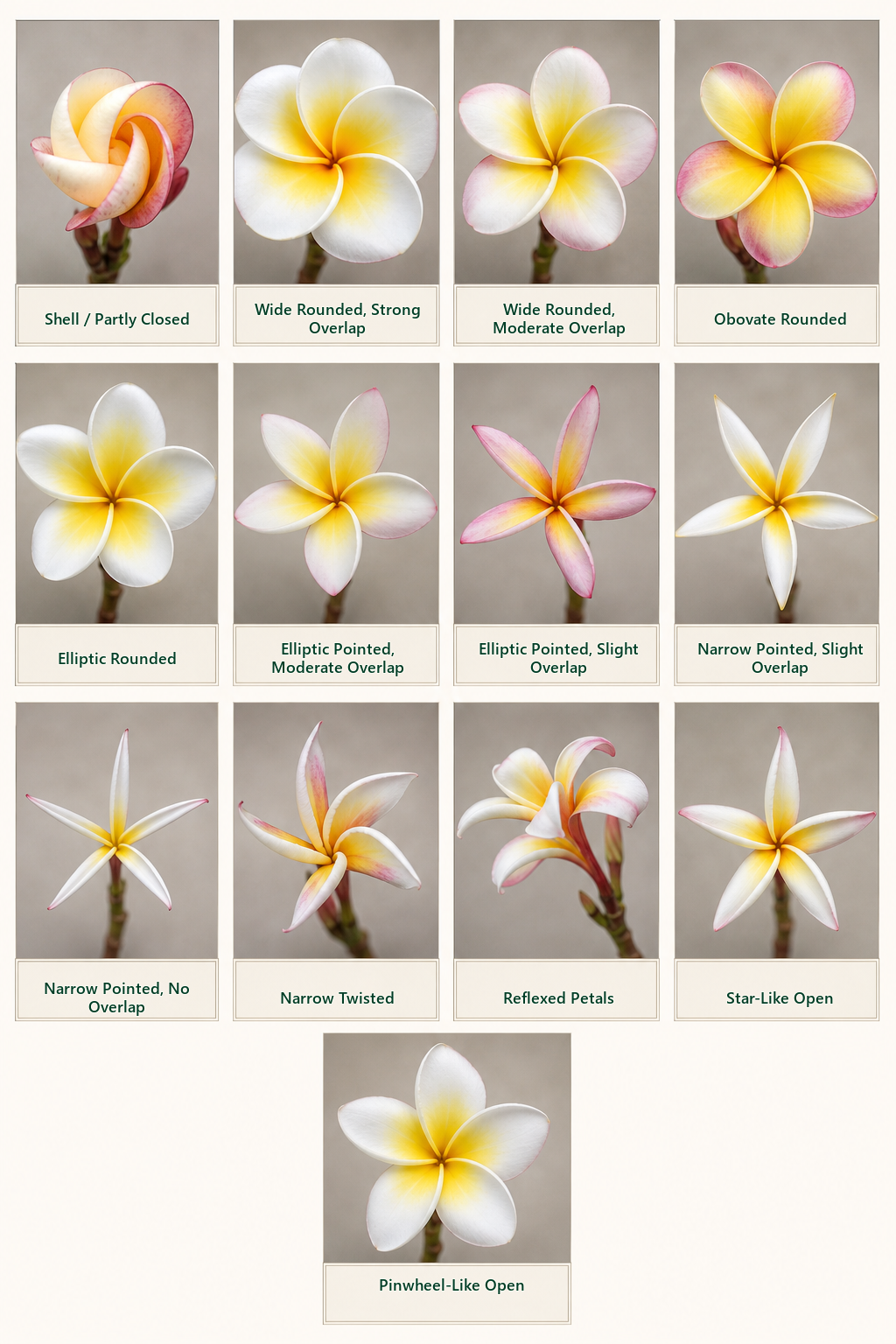
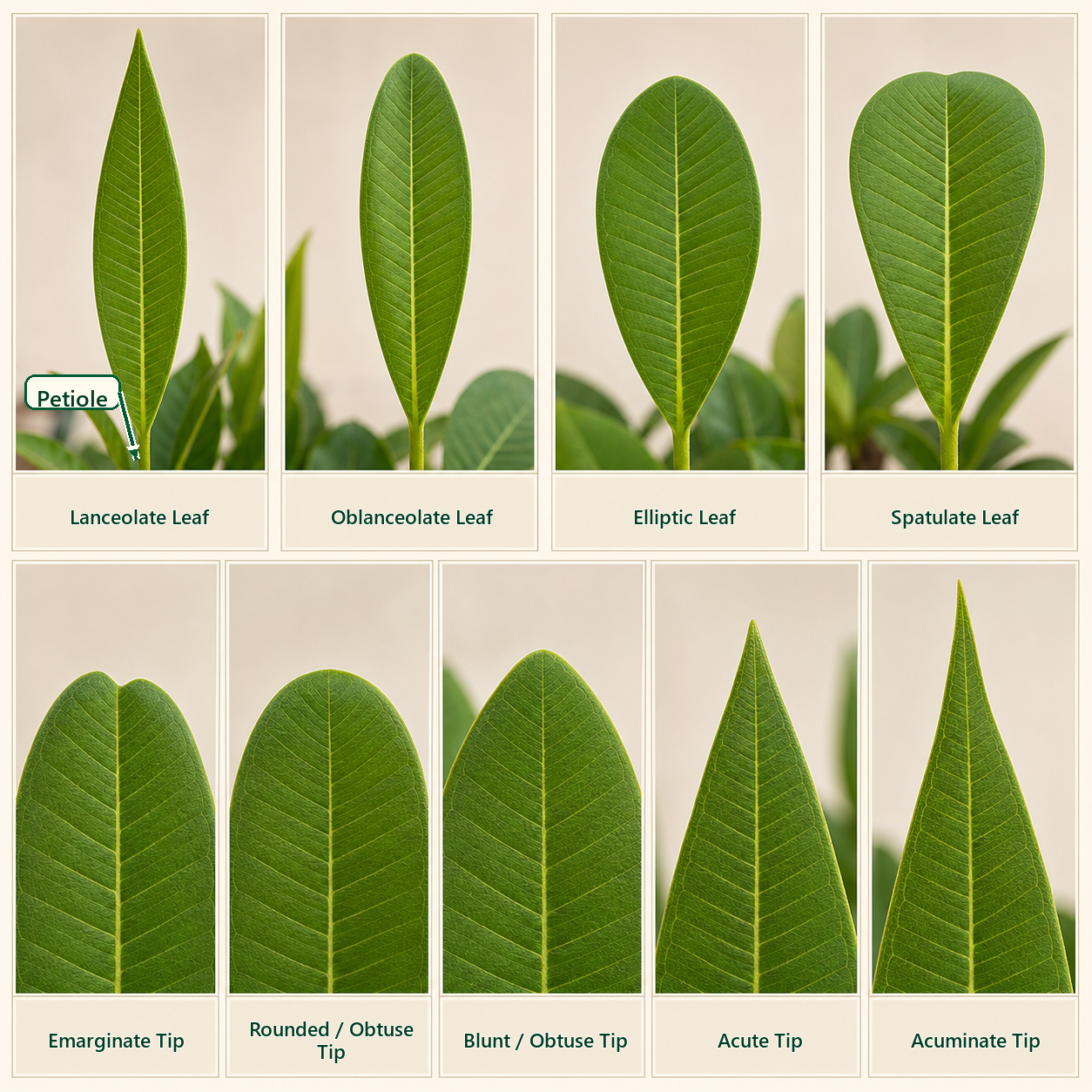
Flower
Bloom size, form, petal shape, overlap, twist, reflex, surface, veining, markings, center color, and color behavior should stay together.
Fragrance
Fragrance strength and scent family should follow flower size because fragrance is one of the most common traits people use for comparison.
Leaf
Leaf size, shape, tip, surface, color, vein pattern, petiole length, and petiole color should be grouped for quick review.
Tree
Growth habit, branching, vigor, compactness, height, and canopy shape describe the plant as a whole, not just one bloom.
Bloom and Seed
Bloom frequency, season, inflorescence, seed production, and rooting should be separate selections so each can be updated independently.
Origin and Status
Country of origin, source, breeder, registration number, parentage, AKA, and review status help explain how reliable the record is.
Identification is comparison
The only true positive identification would require DNA, which is not available yet for this project. The next best approach is to compare all traits, photos, and source history against a known cultivar.
Unknown is better than guessed
Blank or uncertain fields can be marked for review so trusted verifiers know what needs confirmation without treating missing data as a confirmed trait.